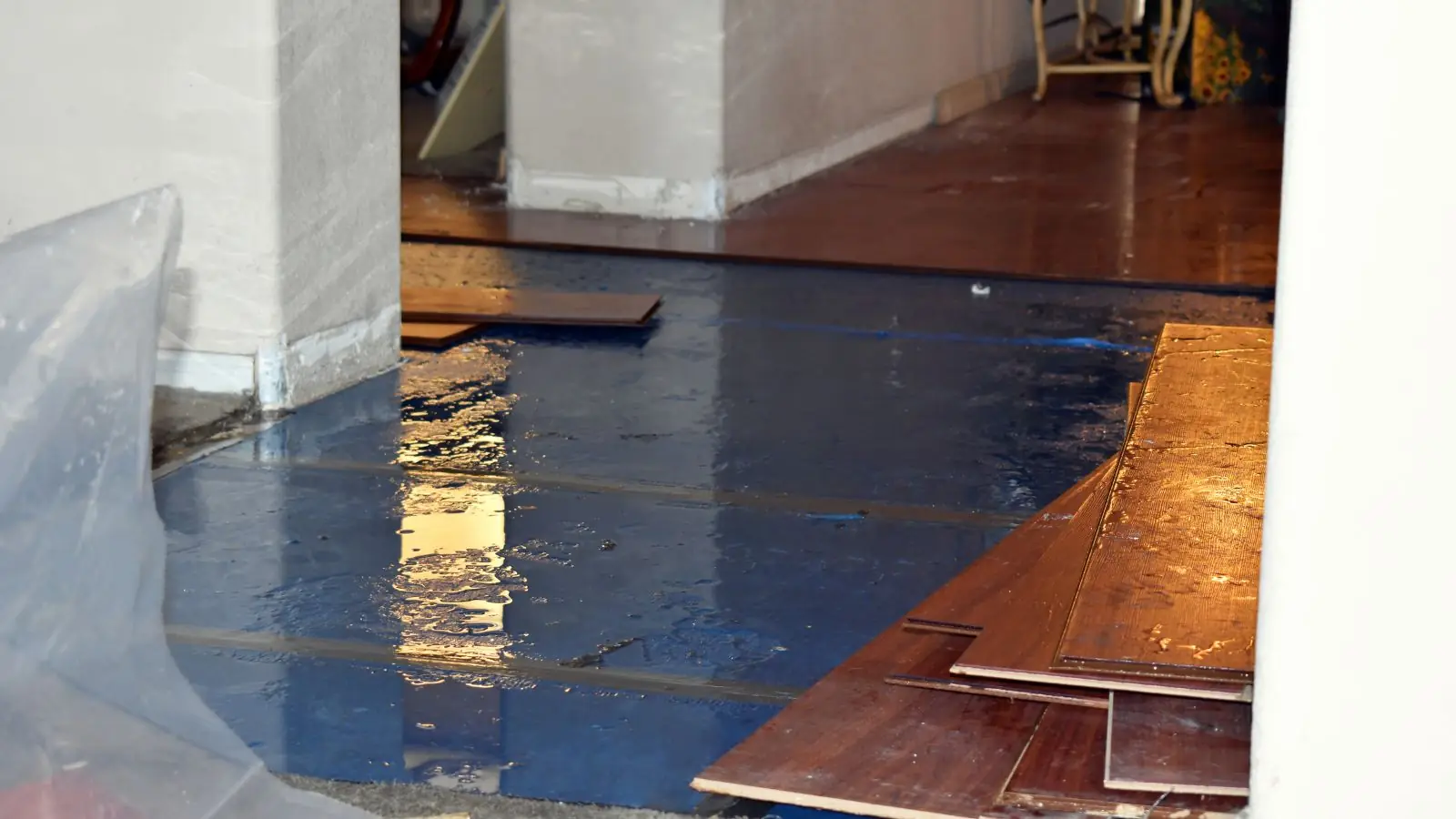
Hardwood floor water damage repair is the process of drying wet boards and the layers under them, then deciding board by board whether the floor can be sanded and refinished or needs partial replacement. If you are standing over a swollen floor in Southlake, TX, the order of those steps matters more than the speed of the final finish coat.
Solid and engineered planks both absorb water through their edges and undersides, so what you see on top is only part of the story. A floor that looks fine on day two can still hold moisture in the subfloor, and that is what decides how the repair goes. The same logic applies for neighbors in Grapevine and Keller, where we also dispatch crews.
Start with an honest assessment of the floor
Before anyone picks a repair path, the floor needs to be read like a patient chart. Note where the water came from, how long it sat, and whether it was clean supply water, a washing machine overflow, or something dirtier such as a sewer backup. Dirtier water changes the plan because the boards and underlayment may have to go regardless of how they look.
Then look at the boards themselves. Raised edges that form a shallow trough are called cupping. A crown in the middle of a board is crowning. Boards that lift off the subfloor are buckling. Dark gray or black staining that runs through the wood usually points to water that sat for days, not hours.
What a moisture meter shows that your eyes cannot
A pin or pinless moisture meter reads the water content of the wood and the subfloor below it. Readings are compared with a dry reference board from an unaffected part of the same house, because the normal moisture level of a floor varies from home to home. A thermal imaging camera helps trace the wet area under the finish, but it points to cold spots and does not give a final moisture number.
This is why a visual check alone leads to bad calls. Finish can hide a wet subfloor, and a sanded floor sealed over a damp base is a floor that cups again in a few weeks. Readings get taken before drying starts, during it, and again before any refinishing.
Drying comes before any repair decision
Drying a hardwood floor means pulling moisture out slowly enough that the boards do not crack. Crews set air movers across the floor, run LGR dehumidifiers to keep the air dry, and often use a floor drying mat system that draws moisture up through the boards. Baseboards may be removed or drilled so air can reach the cavity behind the wall.
Most structural drying runs a few days, and thicker solid planks or wet subfloors can take longer. The target is a set of readings that match the dry reference, not a calendar date. Our water mitigation work follows this logic, and the industry standard ANSI/IICRC S500 describes it, so ask any company whether its crews work to it.
Sand and refinish, patch, or replace: a decision table
Once the floor is dry, the choice usually falls into one of three paths. This table shows the typical signs that point to each one. Final calls depend on moisture readings and a look at the fastening, so treat it as a guide and not a verdict.
| What you see after drying | Likely path | Why |
|---|---|---|
| Mild cupping that flattens as the floor dries | Sand and refinish | The boards are intact and settle back, so leveling the surface is enough |
| A few boards split, stained black or still raised | Replace those boards, then blend | Damage is local, and new boards can be woven into the old pattern |
| Buckling across a large area or lifted nailing | Remove and replace the section | Fasteners have let go and the subfloor often needs a look |
| Engineered planks with delaminated layers | Replace the affected planks | Once the layers separate, drying will not rejoin them |
| Water from a sewer backup or other contaminated source | Remove and replace | Porous flooring that absorbed dirty water is not cleaned in place |
Patch repairs can leave a color difference because old finish has aged and new boards have not. Sanding and refinishing the whole room, or at least to a natural break such as a doorway, is the usual way to make the result look even.
What refinishing and replacement actually involve
Refinishing means sanding off the old finish with a drum or orbital sander, filling small gaps, staining if needed, and applying coats of sealer that each need cure time. Rooms are off limits during the cure, so plan for furniture to stay out and for pets to stay clear. Dust containment keeps the mess from traveling through the house.
Replacement starts with removing damaged boards, checking and drying the subfloor, and installing new boards with matching species, width and grade. Matching old stock is the hard part, and sometimes boards pulled from a closet or hidden area supply the repair. Wherever the damage went beyond the floor, the work moves into water damage repair on walls and cabinets too.
Common mistakes that turn a dry floor into a replaced floor
- Covering the wet floor with plastic or rugs, which traps moisture against the boards.
- Sanding too early, before readings confirm the wood and subfloor are dry.
- Using a household fan alone and calling it done, when the subfloor is still wet.
- Waiting several days to start drying, which gives staining and mold a head start.
- Pulling up all the boards at once when only a section needed to come out.
A good test is simple. If someone wants to refinish before showing you dry readings, ask for the numbers first.
Insurance notes for a wet hardwood floor
The Texas Department of Insurance explains that most homeowner and renters policies cover sudden and accidental water damage, such as a burst pipe or a broken washer hose. Gradual leaks and seepage are usually not covered, and neither is flooding unless you carry a separate flood policy.
Take photos or video of the floor before repairs, keep damaged boards until the adjuster has seen them, and make temporary repairs to stop further damage. Hold off on permanent repairs until the insurer inspects, and keep your receipts. Nobody can promise that a claim will be approved, so ask your insurer what your policy says.
When to call for a wet hardwood floor
If a floor has standing water, a raised board or a musty smell after a recent wet event, the best time to call is now. Early drying is the single biggest factor in how much of the hardwood survives. Our dispatch network of licensed and insured restoration professionals serves Southlake and nearby towns, explains scope and price before work starts, and offers same-day response when available. Call (817) 623-9267.
Southlake permit and records note for floor repairs
The city of Southlake runs permits, plan review and inspections through its Building Inspections office at 1400 Main Street, Southlake, TX 76092, reachable at (817) 748-8236. The city website does not state whether water damage repair needs a permit, so the practical step is to ask the office before a larger floor or subfloor replacement begins.
If the water came from the public side of your service line, Southlake Water Utilities and Public Works maintain the infrastructure that delivers water and wastewater service. For after-hours water or sewer emergencies, Public Works lists (817) 748-8082.
Frequently asked questions
Often yes, if the water was clean and drying began quickly. Mild cupping usually settles as the boards dry, and a sand and refinish can restore a flat surface. Boards that are split, stained black or buckled across a wide area are more likely to need replacement.
Structural drying commonly takes several days, and thick solid planks or a wet subfloor can add time. The goal is moisture readings that match a dry reference board, so the timeline follows the meter and not the calendar.
Stop the source, soak up standing water with towels or a wet vacuum, and lift rugs and furniture legs off the boards. Do not cover the floor with plastic. If the water came from a toilet, drain or sewer line, keep people and pets out and wait for professional cleanup.
Ask the Southlake building inspections office, which handles permits and inspections. The city website does not say whether water damage repair needs a permit, so a quick call tells you what applies to your job. Our water damage cleanup crews can share the scope so you have details ready.
No. Refinishing levels and re-coats boards that are structurally sound. It cannot rejoin delaminated engineered layers, restore split planks, or fix a floor that is nailed to a wet subfloor.
Questions about your own situation? Call and describe what you are seeing.
☎ Call (817) 623-9267