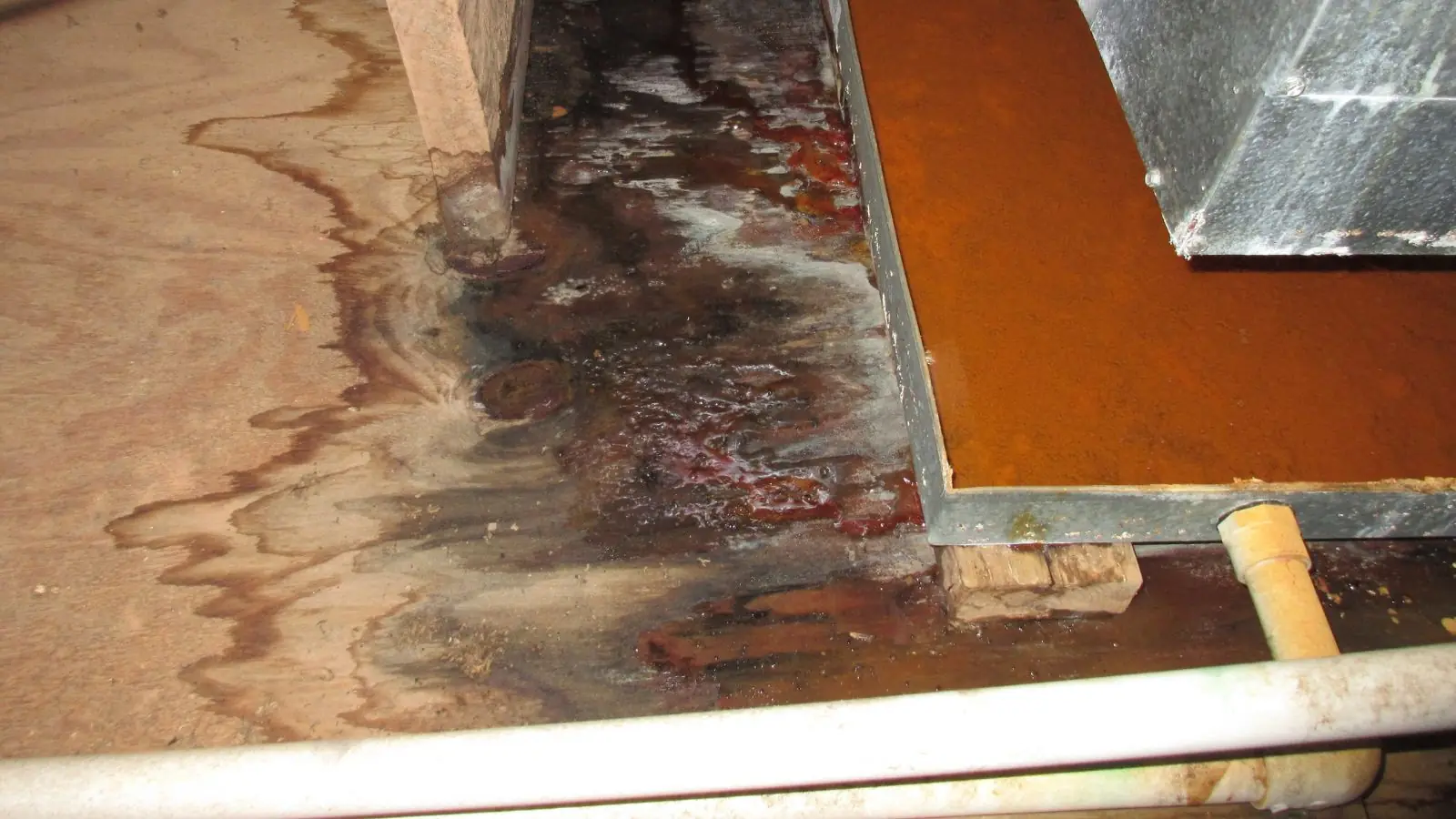
Repairing water damaged wood means deciding, piece by piece, what can be dried back to normal and what has lost its strength or finish for good. In a Southlake, TX home that decision covers a lot of different lumber, from the joists under the floor to the cabinet box under the kitchen sink.
Wood is forgiving when the water was clean and the drying started early. It is much less forgiving after days of dampness. This guide walks through the pieces of a house that are made of wood and what each one tolerates.
Why wet wood behaves the way it does
Wood is a bundle of tiny tubes that pull in water and swell, then shrink as they dry. Slow, controlled drying lets most solid lumber return close to its original size. Fast, uneven drying or repeated wet-dry cycles cause splits, warping and permanent twisting.
Time matters as much as the amount of water. The Texas Department of Insurance notes that mold can start growing within a day after a leak. Wood that stays damp past that window may need more than drying, and it is the reason crews check moisture content with a meter and not by touch.
Sorting wood by job: dry it, treat it, or replace it
Not every wooden part carries the same risk. Structural pieces such as joists, studs and subfloor are judged by strength and moisture. Finish pieces such as trim, doors and furniture are judged by how the surface and joints hold up. Engineered products that use glue or fiber layers behave differently from solid boards.
| Wood item | Usually dried and kept when | Usually replaced when |
|---|---|---|
| Joists and beams | Water was clean and readings return to normal | Soft spots, rot or deep, repeated wetting |
| Plywood subfloor | Layers are bonded and flat | Layers separate or edges crumble |
| Particleboard or OSB | Rarely, and only if lightly wet | Swollen edges or crumbling, which does not reverse |
| Baseboard and trim | Solid wood that dries straight | Finger-jointed or MDF trim that swells |
| Cabinets | Solid wood boxes with surface wetting | Particleboard boxes with swollen bases |
| Furniture | Solid pieces with intact joints | Veneer lifting or joints that have opened |
Structural wood: joists, studs and subfloor
Dimensional lumber in a framed house is the sturdiest wood you own. Joists and studs typically dry well because they are thick and solid. A moisture meter reading, tapping for soft sounds and a probe test with a screwdriver tell you whether the fibers are still firm.
Plywood subfloor handles a single clean soaking better than particleboard. Plywood layers are glued with water-resistant adhesive and often recover, while particleboard swells at the edges and loses its grip on fasteners. If a subfloor stays soft after drying, the damaged section is cut out and replaced with matching thickness, and the joist below is checked first.
Trim, doors and cabinets
Baseboards are often the first thing removed in a water loss, because pulling them gives air movers access to the wall cavity and lets crews check the bottom plate. Solid wood trim can be reinstalled after drying, and nail holes get filled and painted. MDF trim swells and is almost always replaced.
Kitchen and bath cabinets depend on their construction. A solid wood face frame with a plywood box can often be dried in place by lifting the toe kick and running air under the unit. Particleboard boxes that have swollen bases rarely return to square, and a leaking supply line under a sink is a common reason a cabinet needs replacement. Where the cabinet and the wall both took water, our water damage repair scope covers the rebuild.
Furniture and personal wood items
Solid wood furniture with tight joints is the best candidate for saving, whether the piece sits in Southlake or in a home we reach in Colleyville. Move it to a dry room, let it air out away from direct heat, and avoid forcing it to dry fast with a heater. Rapid heat causes cracking. White rings or cloudy finish on the surface are often cosmetic and fixable by a furniture refinisher.
Veneer is less forgiving because the thin top layer bonds to a core with glue, and glue lets go when wet. Antique and sentimental pieces should be photographed and kept until your insurer has looked at them. A trained restorer can advise whether specialty work is worth it, and cleanup of the room around the piece falls under water damage cleanup.
The repair order for a wood loss
- Stop the water at its source and shut off the main valve if a supply line failed.
- Photograph everything before it is moved or removed.
- Remove standing water and wet porous materials that cannot be saved.
- Open the cavities, then dry with air movers and LGR dehumidifiers.
- Take moisture readings daily and compare them with a dry reference.
- Replace what failed the readings, then refinish, prime and paint.
Painting or sealing before readings are right locks moisture in. That is how a repair that looked finished turns into a second job a few months later.
What restoration cannot do for wood
Drying cannot undo rot. Wood that has softened because fungi have been feeding on it for weeks is replaced, not salvaged. Restoration is also not waterproofing, so the crew can get the wood back to a dry, sound state, but it will not make the area resistant to the next leak.
Fixing the cause is the real prevention. That means repairing the supply line, the roof flashing, the condensate line or whatever let the water in. Without that, the same wood will get wet again and the repair will repeat. Homes we serve in Roanoke face the same rule.
The published ANSI/IICRC S500 standard is the reference for drying water-damaged structures, wood included. Ask any contractor whether its crews work to S500 and how they will show that framing and subfloor have reached dry readings.
When to call about wet wood
The right moment to phone is while framing, cabinets or trim are still wet, or the first time you notice soft spots, swelling or dark staining. Our dispatch network of licensed and insured restoration professionals serves Southlake and nearby towns, explains scope and price before work starts, and offers same-day response when available. Call (817) 623-9267.
What Southlake's drainage rules mean for wet wood
Southlake's city website explains that its Streets and Drainage Team responds to storm damage and that the city sweeps streets, but city crews are not legally allowed to use public resources to clean private property. In plain terms, wood inside your house, under your deck or in your crawl space is for you or your HOA to dry and repair.
Anyone building or rebuilding in a floodplain needs a special floodplain permit, and the city's interactive map shows the 100-year and 500-year flood zones under the Environmental tab. Check that map and the FEMA Flood Map Service Center for your address before deciding how much wood to replace.
Frequently asked questions
Solid wood that stayed wet for a short time often dries back to a sound state. Particleboard, MDF and veneer usually do not recover because their glue or fibers break down when wet.
Press a screwdriver or awl into the wood. If it sinks in easily or the wood crumbles, the fibers have softened and the piece needs replacing. Firm wood that resists the probe is usually fine once it dries.
Not before the wood is dry. Sealing damp wood traps moisture and invites repeat problems. Stains from a one-time clean water event often lighten on solid wood after drying, and stubborn marks can be handled with refinishing.
The city says its Streets and Drainage Team responds to storm damage on public streets and that city crews cannot use public resources to clean private property. Homeowners and HOAs maintain their own property, so water that reaches your wood is yours to dry. Our flood damage restoration crews can scope that work.
Typically not when the rot came from a gradual leak or long-term seepage. Sudden and accidental water damage is usually covered, so ask your insurer what your own policy says.
Questions about your own situation? Call and describe what you are seeing.
☎ Call (817) 623-9267